The Silent Damage Modern Life Is Doing to Your Gut (And Why It’s Showing Up as Belly Fat, Fatigue & Brain Fog)
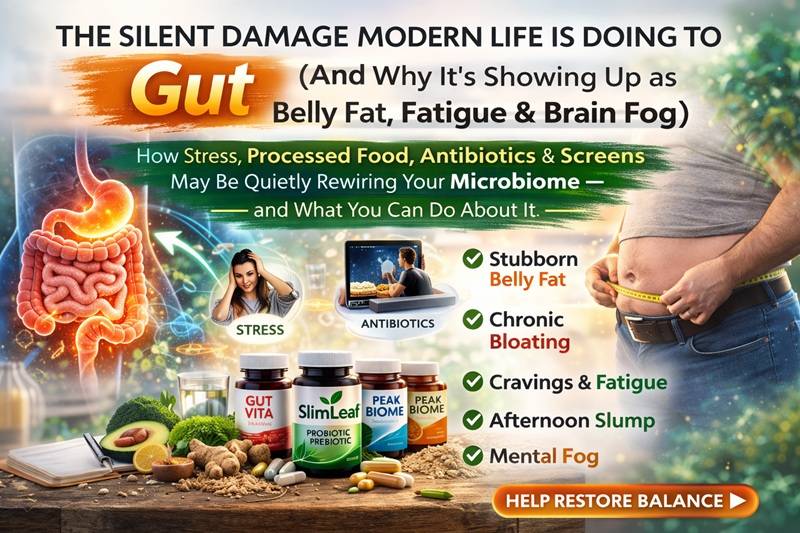
How Stress, Processed Food, Antibiotics & Screens May Be Quietly Rewiring Your Microbiome -and What You Can Do About It
The Damage Most People Don’t See
A few months ago, I began noticing something subtle in my own body.
Nothing dramatic.
Just:
- Slight belly puffiness by afternoon
- Brain fog around 3PM
- Cravings that felt strangely uncontrollable
- Slower recovery after workouts
My diet hadn’t changed much. I exercised consistently. Sleep was decent.
But something felt… off.
As a long-time researcher in metabolic and digestive health, I knew these weren’t random symptoms.
They pointed somewhere deeper.
And what I discovered is something most modern adults are experiencing — without realizing it.
Our lifestyle is quietly damaging our gut microbiome.
And the effects don’t show up immediately.
They accumulate.
The Modern Lifestyle Problem No One Talks About
We talk about calories.
We talk about carbs.
We talk about macros.
But very few people talk about:
Chronic low-grade stress
Ultra-processed food additives
Artificial light exposure at night
Antibiotic overuse (even in childhood)
Sedentary screen-based living
Sleep disruption
Each of these factors has one thing in common:
They directly alter the gut microbiome.
Not slightly.
Significantly.
And when your microbiome shifts, everything shifts.
What Happens When Your Gut Bacteria Change?
Your microbiome regulates:
Fat storage signaling
Hunger hormones (ghrelin & leptin)
Insulin sensitivity
Inflammation levels
Nutrient absorption
Mood chemistry (via the gut-brain axis)
When beneficial bacteria decline and opportunistic strains increase, your body enters what researchers call metabolic dysbiosis.
The symptoms often look like:
Stubborn belly fat
Bloating after “healthy” meals
Afternoon crashes
Sugar cravings
Increased anxiety
Skin flare-ups
Slower fat loss despite calorie control
The frustrating part?
Most people blame themselves.
But the issue often isn’t discipline.
It’s microbial imbalance.
The Hidden Gut Damage from Modern Living
Let’s break down the biggest invisible disruptors.
1️⃣ Chronic Stress & Cortisol Spikes
Your gut lining is highly sensitive to cortisol.
Long-term stress:
Weakens gut barrier integrity
Alters bacterial diversity
Increases inflammatory markers
Even if your diet is good, chronic stress alone can shift microbial composition toward fat-storage-promoting strains.
2️⃣ Ultra-Processed “Health” Foods
Many “low calorie” or “high protein” packaged foods contain:
Emulsifiers
Artificial sweeteners
Preservatives
Studies show certain additives can disrupt the gut lining and alter bacterial populations.
Ironically, many diet foods marketed for weight loss may be contributing to metabolic slowdown.
3️⃣ Sleep Deprivation
Just one week of restricted sleep can change microbiome diversity.
Disrupted circadian rhythm affects:
Glucose metabolism
Gut motility
Hormonal regulation
Late-night scrolling doesn’t just affect your brain.
It affects your bacteria.
4️⃣ Repeated Antibiotic Exposure
Even short antibiotic courses can reduce beneficial strains for months.
Many adults are still experiencing downstream effects from antibiotics taken years ago.
Why Belly Fat Is Often a Gut Signal
Here’s something most weight-loss discussions miss:
Visceral fat is strongly linked to inflammatory signaling from the gut.
When gut bacteria produce higher levels of inflammatory compounds, the body:
Increases insulin resistance
Stores more abdominal fat
Slows metabolic flexibility
This is why some people eat less and exercise more — yet still struggle with midsection weight.
It’s not purely a calorie equation.
It’s a signaling equation.
My Turning Point: Supporting the Microbiome Directly
When I began addressing gut balance directly, things shifted.
Not overnight.
But steadily.
I introduced a microbiome-focused supplement protocol centered around SlimLeaf, because its formulation emphasizes:
Targeted probiotic strains
Prebiotic support
Metabolic-activating botanical compounds
Gut barrier support nutrients
Unlike generic probiotics, SlimLeaf is structured around metabolic and digestive signaling — not just digestion alone.
Within several weeks, I noticed:
Reduced bloating
Fewer cravings
More stable energy
Easier fat loss response
It wasn’t dramatic.
It was subtle and sustainable.
Which, in research terms, is usually the most reliable sign of genuine physiological improvement.
Why Fiber Alone Isn’t Enough
Many people increase fiber and assume that’s sufficient.
Fiber is essential.
But:
If bacterial diversity is low, fiber fermentation may not occur optimally.
You need:
Beneficial bacteria
Prebiotic substrate
Anti-inflammatory support
Gut lining integrity
This is why microbiome-focused blends like SlimLeaf can complement dietary improvements instead of replacing them.
The Emotional Cost of Gut Imbalance
What surprised me most wasn’t the physical shift.
It was the emotional relief.
When your gut is unstable, you feel:
Out of control
Frustrated
Disciplined yet stuck
When microbial balance improves, hunger signals stabilize.
Cravings soften.
Energy smooths out.
And suddenly, your body feels cooperative again.
That’s powerful.
The Modern Gut Reset Framework
Here’s the evidence-based approach I now recommend:
1️⃣ Reduce inflammatory inputs
Minimize ultra-processed foods
Reduce artificial sweeteners
Improve sleep timing
2️⃣ Support stress regulation
Morning sunlight exposure
Breathwork
Moderate training vs overtraining
3️⃣ Introduce microbiome support
High-quality probiotic/prebiotic blend
Diverse plant intake
Polyphenol-rich foods
4️⃣ Maintain consistency for 8–12 weeks
Microbiomes shift gradually.
Quick fixes rarely last.
Why This Matters More Now Than Ever
Our environment is not getting less stressful.
Food is not getting less processed.
Screen time is increasing.
Which means gut imbalance will likely become more common.
Addressing microbiome health now is not just about fat loss.
It’s about long-term metabolic resilience.
Frequently Asked Questions
How do I know if my gut is damaged?
Common signs include bloating, irregular digestion, stubborn belly fat, fatigue, cravings, and mood swings.
Can probiotics alone fix gut imbalance?
Not always. You need comprehensive support: bacteria, prebiotics, anti-inflammatory inputs, and stress reduction.
How long does it take to rebalance the microbiome?
Most people notice improvements within 4–8 weeks, but deeper changes may take 3 months or more.
Is belly fat always a gut issue?
No. But gut inflammation significantly influences abdominal fat storage.
Final Thoughts: Your Body Isn’t Broken
If you’ve been eating “clean” and exercising but still struggling, you’re not failing.
You may simply be overlooking the ecosystem inside you.
Modern life is quietly disrupting gut balance.
When you restore it, everything else becomes easier.
Supporting your microbiome — through diet, stress control, and targeted support like SlimLeaf — may be one of the most overlooked levers in metabolic health.
And sometimes, the most powerful fixes are the ones no one is talking about.
If you suspect your gut may be holding you back, consider taking a microbiome-first approach instead of another restrictive diet.
Start by evaluating your stress, sleep, and processed food intake.
Then explore structured microbiome support such as SlimLeaf to help restore internal balance.
Your metabolism may simply be waiting for the right signals.