Gut Health & Weight Loss: Why Your Microbiome May Be Blocking Fat Loss (And How to Fix It Naturally)
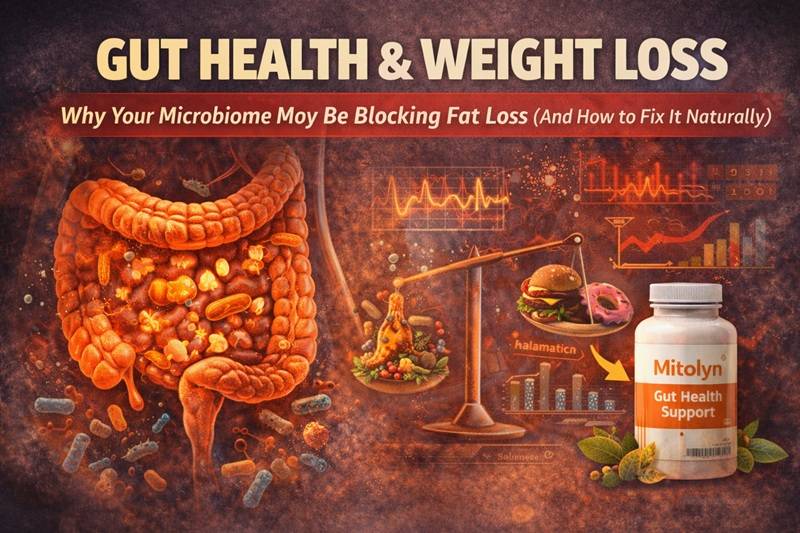
The overlooked digestive connection influencing metabolism, cravings, inflammation, and long-term weight control
When “Eating Right” Still Isn’t Enough
A few years ago, a reader emailed me with a familiar frustration.
She’d cleaned up her diet. Cut calories. Walked daily. Even tracked macros.
Yet the scale barely moved — and her digestion felt worse than ever.
Bloating. Irregular hunger. Random cravings. Low energy.
What she didn’t realize at the time was that her gut — not her willpower — was quietly controlling the outcome.
Modern research now confirms what clinicians have suspected for years: your gut microbiome directly influences fat storage, appetite signals, inflammation, and metabolic efficiency.
And if it’s out of balance, sustainable weight loss becomes an uphill battle.
The Gut–Metabolism Connection (What the Science Shows)
Your gut houses trillions of microorganisms that act like a hidden metabolic organ.
Well-balanced gut bacteria help regulate:
- Energy extraction from food
- Blood sugar stability
- Fat storage signaling
- Appetite hormones (ghrelin & leptin)
- Inflammatory responses
When this ecosystem shifts toward imbalance — known as dysbiosis — weight loss resistance often follows.
🔬 Key mechanism (simplified):
Certain gut bacteria increase how many calories your body absorbs from food. Others influence insulin sensitivity and fat storage hormones.
This means two people eating the same meal can experience very different metabolic outcomes.
How Gut Imbalance Sabotages Fat Loss
1️⃣ Increased Inflammation
Chronic low-grade inflammation interferes with insulin signaling, pushing the body toward fat storage instead of fat burning.
This is one reason inflammation-targeted approaches often succeed where calorie restriction fails.
2️⃣ Blood Sugar Instability
An unhealthy gut can impair glucose regulation, leading to energy crashes and cravings — especially for refined carbs.
🔗 To Read: “how metabolism and gut health interact”
3️⃣ Appetite Hormone Disruption
Gut bacteria influence ghrelin (hunger) and leptin (satiety).
When signals are distorted, people often feel hungry shortly after eating.
This isn’t lack of discipline — it’s biological miscommunication.
Modern Lifestyle Habits That Damage Gut Balance
- Highly processed foods
- Artificial sweeteners
- Chronic stress
- Poor sleep
- Repeated antibiotic exposure
Over time, these factors reduce microbial diversity — a key predictor of metabolic resilience.
Rebuilding Gut Health for Sustainable Fat Loss
🥦 Step 1: Feed the Right Bacteria
Fiber-rich foods act as prebiotics that nourish beneficial microbes.
Examples:
- Vegetables
- Legumes
- Resistant starches
- Fermented foods
But diet alone isn’t always enough - especially if digestion is already compromised.
🧠 Step 2: Support the Gut–Brain Axis
Stress hormones directly affect gut permeability and bacterial balance.
🔗 To Read “stress-driven weight resistance”
🧪 Step 3: Target Inflammation & Metabolic Support
This is where science-backed supplementation can be helpful when used strategically.
Some advanced metabolic formulas focus on:
- Reducing gut-driven inflammation
- Supporting insulin sensitivity
- Improving liver and metabolic signaling
🔗 To Check Out: “metabolism-supporting formulas designed to work with gut health”
Why Extreme Diets Often Worsen Gut Health
Low-calorie, restrictive plans can starve beneficial bacteria — reducing microbial diversity.
Short-term weight loss may occur, but rebound weight gain becomes more likely.
This explains why sustainable fat loss approaches prioritize internal balance, not deprivation.
Supporting Appetite Regulation Through Gut Balance
Certain natural compounds help stabilize blood sugar and appetite signaling by supporting gut-liver communication.
🔗 To Read: “appetite-regulating metabolic support”
How Gut Health Fits Into the Bigger Fat-Loss Picture
Gut balance doesn’t work in isolation. It connects directly to:
- Metabolism
- Stress hormones
- Appetite control
- Inflammatory load
🔗 To Read: “science-backed sustainable fat loss framework”
Practical Takeaways
- Gut imbalance can stall fat loss even with “perfect” habits
- Microbiome diversity influences calorie absorption and appetite
- Inflammation and blood sugar instability often originate in the gut
- Sustainable fat loss requires internal support, not harsher dieting